How long does a gear last, and what determines its service life?
How long does a gear last, and what determines its service life?
A gear has no universal lifespan in years or operating hours. Its service life depends on load history, speed, material, heat treatment, tooth geometry, lubrication and alignment, as well as the failure limit used. A useful life estimate therefore needs a defined duty cycle and reliability target, followed by checks for tooth-root fatigue, surface damage and wear.
What information makes a life estimate useful?
- Operating duty: torque and speed at each load level, running hours, starts, reversals and overloads.
- Gear and assembly: drawing, material condition, tooth finish, mating gear and shaft or bearing alignment.
- Lubrication: lubricant specification, delivery method, temperature and contamination control.
- Acceptance limit: define unacceptable pitting, cracking, wear or backlash and the required reliability.
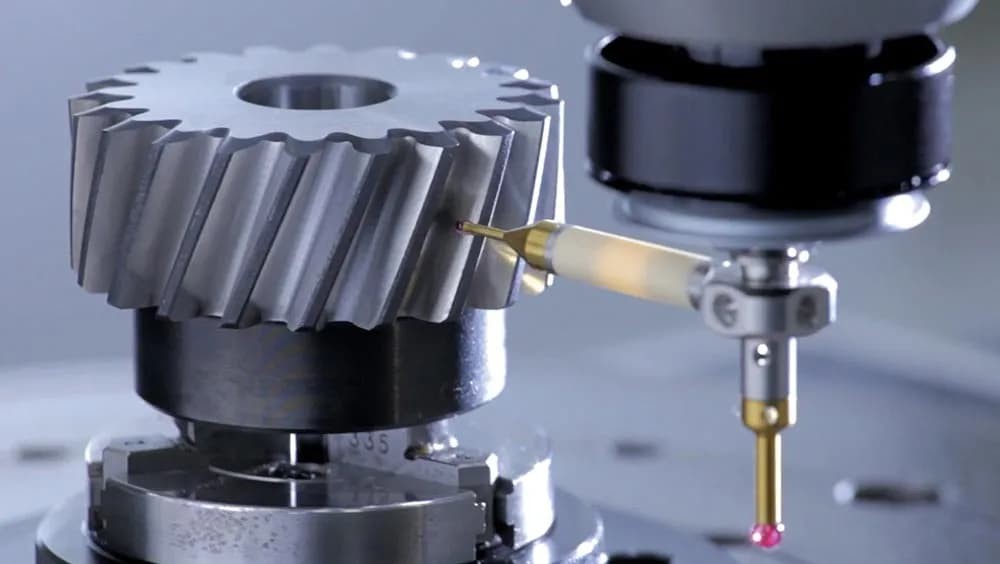
A dimensional inspection supports this assessment, but cannot establish service life on its own.
Example: hours are not the same as fatigue cycles
For a simple gear pair with one loaded engagement per tooth per revolution, a gear running at 600 rpm for 1,000 hours accumulates 600 × 60 × 1,000 = 36 million loading cycles per tooth. This is a cycle-count example, not a predicted life.
The same running hours at another speed produce a different count. Different torque levels also cause different fatigue damage, so cycle count alone is insufficient.
How can service conditions shorten life?
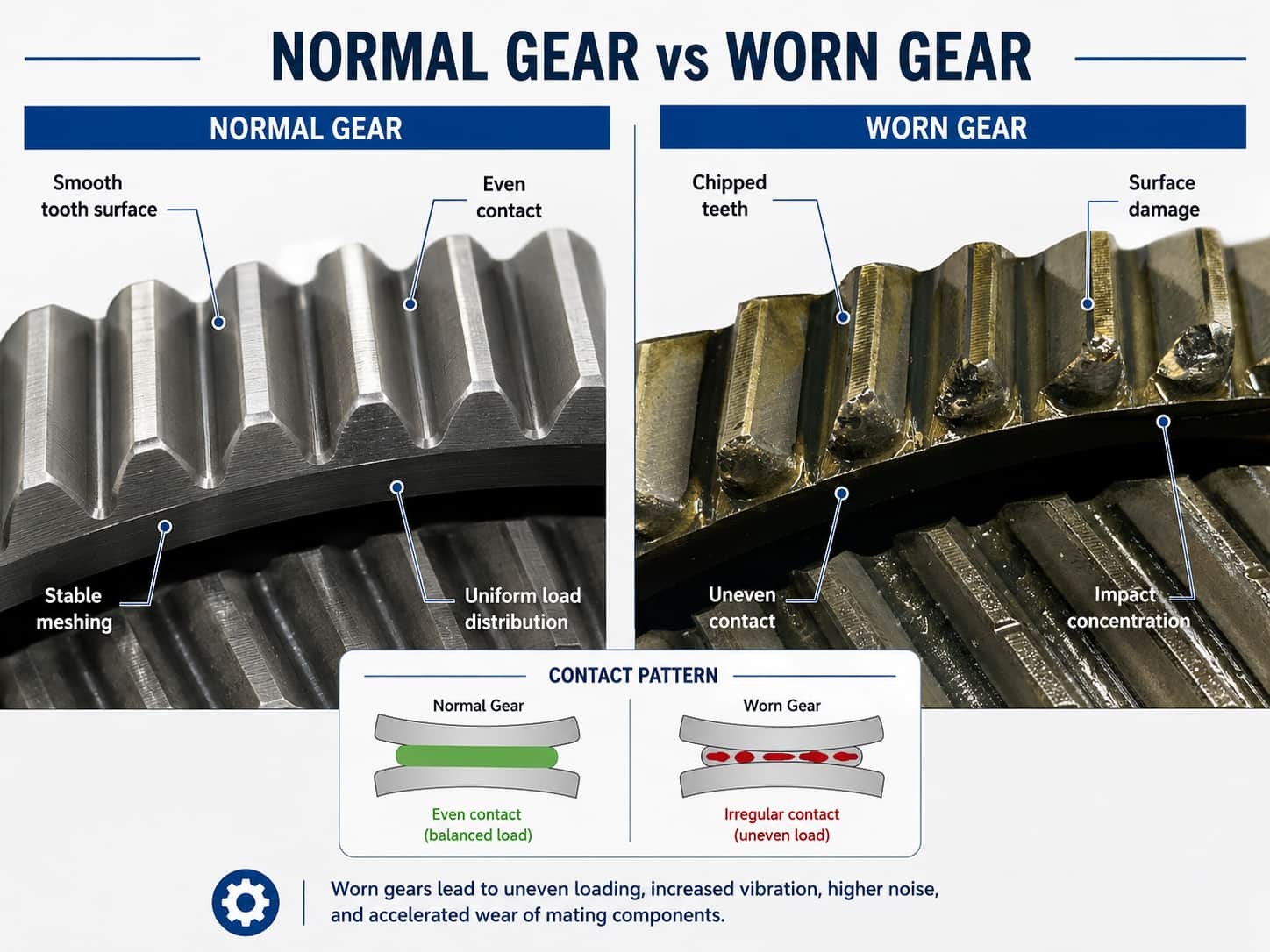
Poor lubrication can increase friction and temperature. Misalignment can concentrate load, while overloads can damage a gear before its planned fatigue life. Inspect changes in vibration, noise, backlash and tooth condition against the machine’s maintenance requirements.
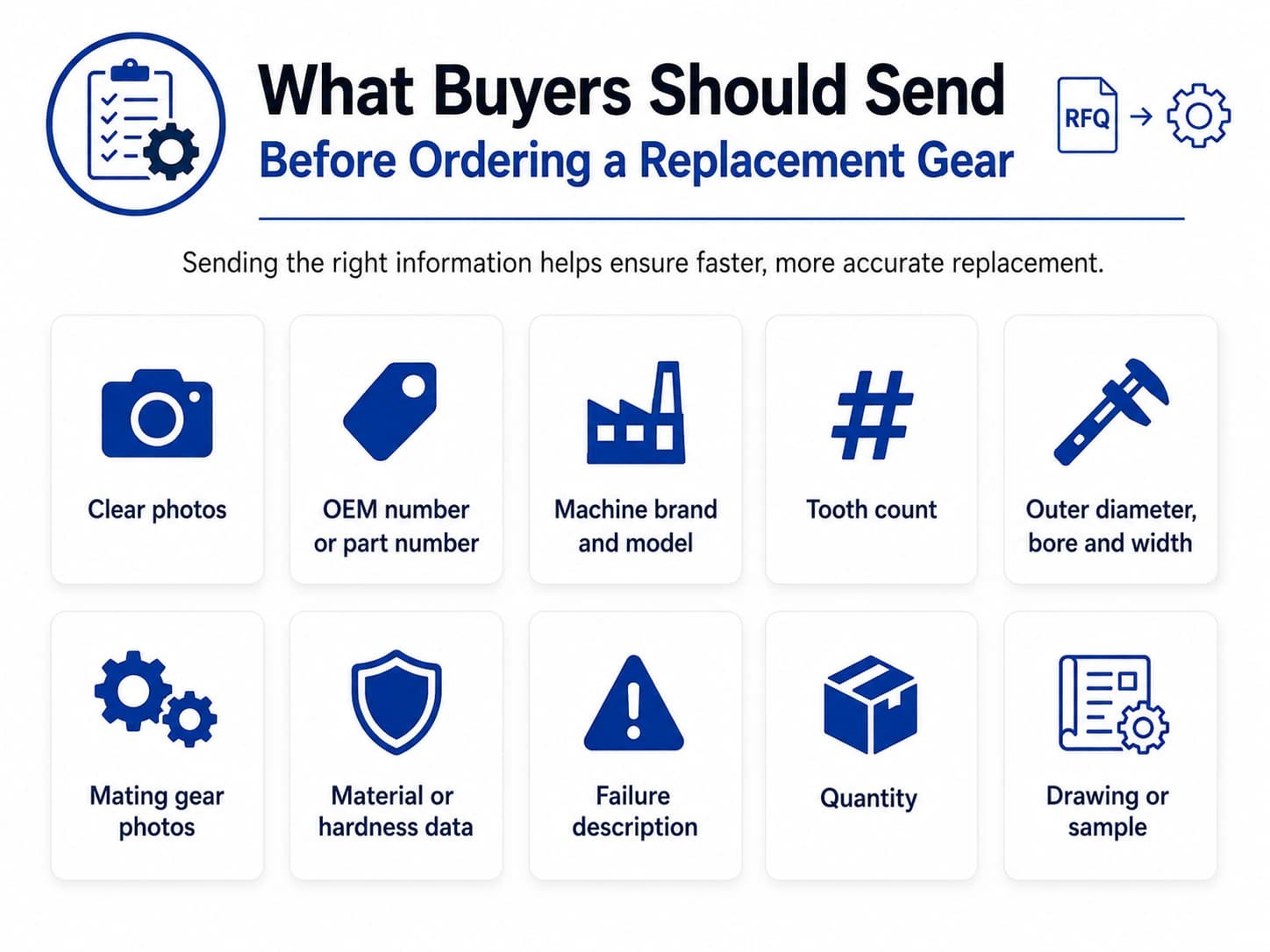
For an existing worn part, record its operating history and inspect the mating components. PairGears’ worn-gear review guide explains useful replacement information. A warranty period is a separate commercial term, not a calculated fatigue life.