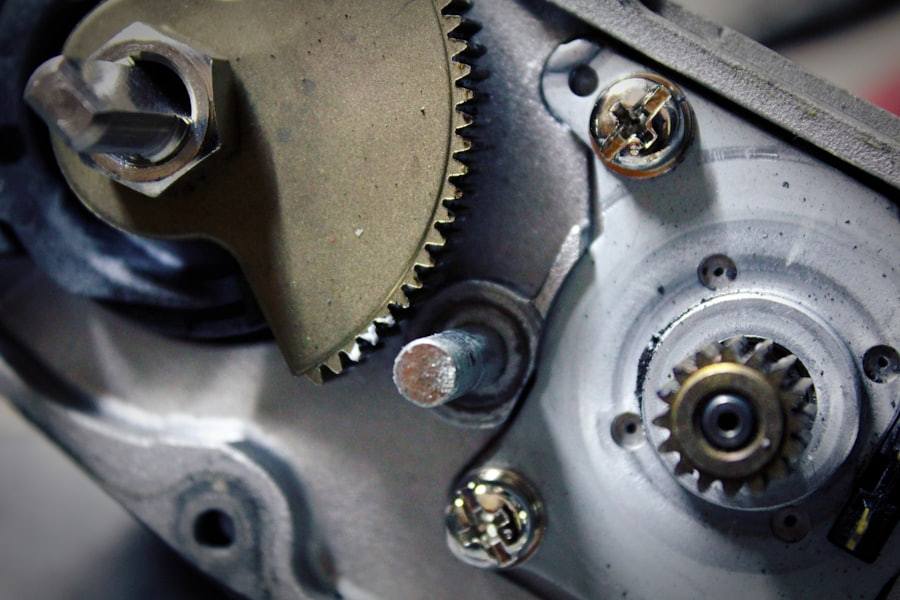
Can three gears work together?
Three gears: driver, idler and driven gear
Yes. Three gears can work together as a simple gear train: a driving gear, an idler and a driven gear. The idler transfers motion and changes the rotation arrangement, but the final ratio still comes from the tooth counts of the first and last gears. PairGears reviews the complete train, not only the visible middle gear.
Detailed explanation
Start by assigning each role: the driver receives input, the driven gear supplies output, and the idler sits between them. With external gears, each mesh reverses direction; two meshes mean the first and last gears rotate in the same direction.
For a simple train, the idler tooth count cancels from the overall ratio. If the driver has 20 teeth and the driven gear has 60 teeth, the reduction remains 60/20 = 3:1 whether the idler has 20, 30 or 40 teeth. The idler still matters for center distance, packaging, shaft support, added mesh loss, noise and clearance. See the PairGears driver, driven and idler guide for those roles.
Example and data to confirm
Record tooth count, module/DP, pressure angle, face width, center distances, the required output direction, torque, speed, lubrication and housing layout. A three-gear layout can be valid on paper yet still fail if the middle shaft deflects, backlash is not allocated across both meshes, or the idler interferes with the housing.